As visitors to my Facebook page already know, I had a really good time on our long weekend in L.A. a week or so ago. I won't recap the boring details but I thought I'd share a few of the photos I took. I've always been really interested in architecture and design (until my senior year in high school, I thought I was going to be an architect) and these photos show some of the iconic places that we visited.
Our first day there, we went to Hollywood Blvd:
- The First National Bank Building on the northeast corner of Hollywood and Highland was built in 1927 and until 1932 was the tallest building in Hollywood. It was designed by the architectural firm Meyer and Holler, who also designed Grauman's Chinese Theatre and the Egyptian Theatre.
- Built in 1926, the El Capitan hosted Citizen Kane's world premeire.
- The Roosevelt Hotel hosted the first Oscars in 1929 and many famous people, including Mariln Monroe and Frank Sinatra, have lived there.


Our 2nd day at the Los Angeles County Museum of Art:
- Frank Lloyd Wright designed lamp
- the building housing the Japanese and Koren art exhibits
- looking up at the Variety building from the balcony outside of the Broad Contemporary Art Museum
- two pictures of the Page Museum (La Brea Tar Pits), which is right next to LACMA
- looking up at the Variety building from the balcony outside of the Broad Contemporary Art Museum
- two pictures of the Page Museum (La Brea Tar Pits), which is right next to LACMA


From the last couple of days in California:
- Underneath the Manhattan Beach Pier - numerous film scenes made near this pier (Falling Down, Point Break, Tequila Sunrise)
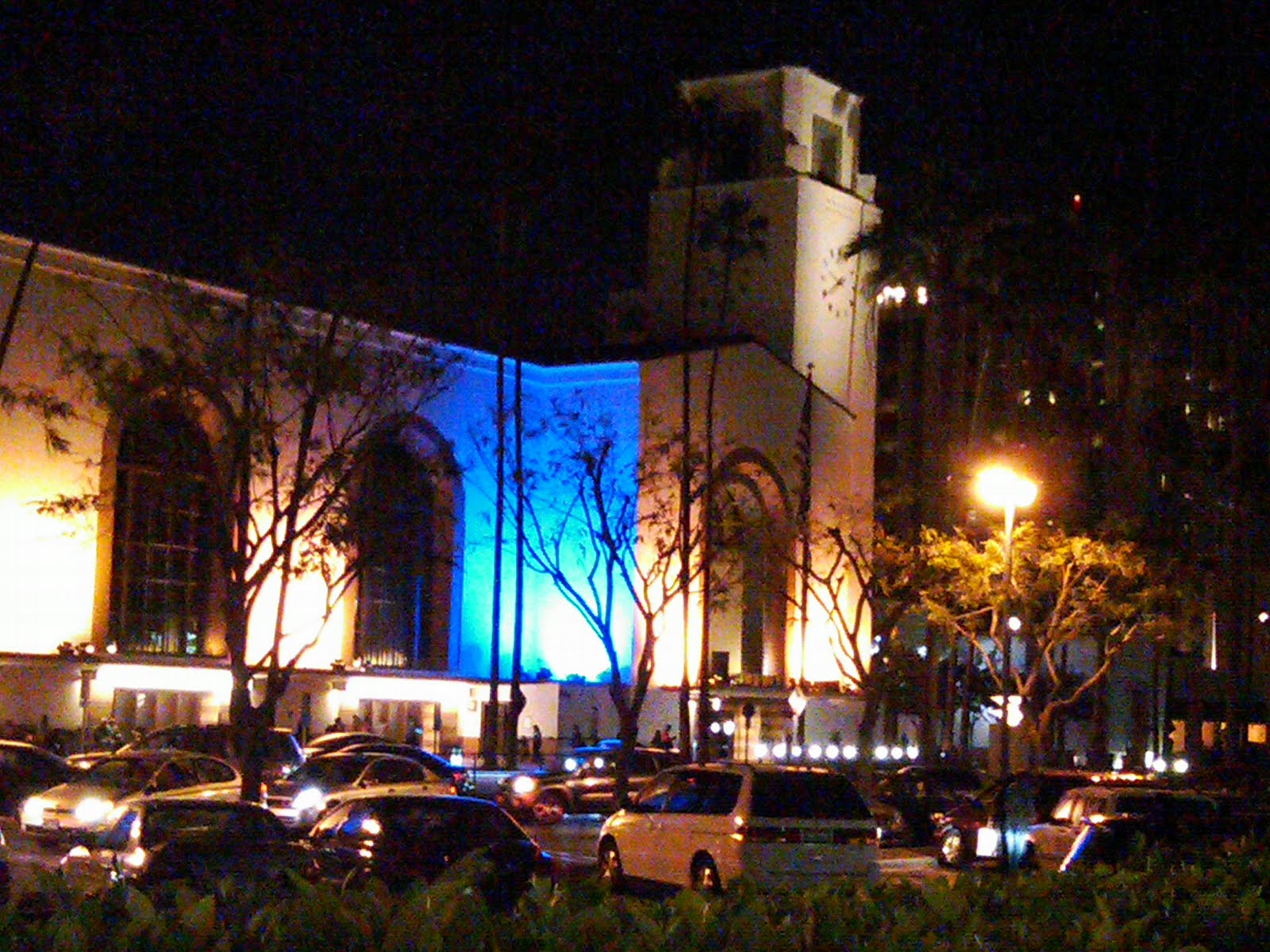
- picked up Michelle's mom from the Union Station train depot in downtown L.A. Blade Runner, Speed, Italian Job, Drag Me to Hell all used this station as a backdrop. The interior of the station is fantastic with Art Deco lighting and decorations.


============================================
Speaking of modernist architecture and design, I attended a screening of Visual Acoustics, a documentary of Julius Shulman, at the Phoenix Art Museum today. Shulman is the preeminent architectural photographer and has documented all of the most famous modernist architects including Wright, Richard Neutra, Frank Gehry, etc. This was a great film. You would think it would have only attracted a few nerdy architecture students, but the film room was packed (probably 500 people). His life and photographs do a great job of documenting 20th century architecture, especially in SoCal.


