As if we need any kind of confirmation that network television is a bottomless abyss bereft of either morality or courage, tonight in the 2nd quarter of the New England Patriots - Denver Broncos, CBS aired a Focus on the Family "pro-life" commercial where a series of small children recited John 3:16:
It was not too big of a surprise that Focus on the Family chose this game to run the ad considering that the 2nd coming of Christ was present, Tim Tebow. That a mainstream network would actually run such drivel by a hate group IS.
Would CBS have allowed advertisements by Planned Parenthood or an atheist/humanist group? How about a Muslim group? Every time I hear a Christian complain about how much they are persecuted or how they are not allowed to express themselves, I get sick. They are the forever favored majority with the Napoleon complex.
And don't even get me started about using small children to make this advertisement. Richard Dawkins has often made the point that religious indoctrination is tantamount to child abuse. Children are not born religious.
Final score: 45-10 Patriots over the Broncos. Apparently even God is sick of hearing about Tim Tebow and Focus on the Family.
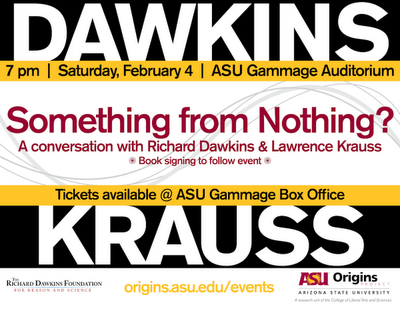
Yes, I'm cool. Admit it. I'm getting to see Richard Dawkins for the 3rd time! Plus, Lawrence Krauss. I'm going to wait around to get Mr. Dawkins to sign one of my books this time.
Sitting down to review The Girl with the Dragon Tattoo, I had to get myself in the mood. How better to do it than with a Nine Inch Nails Genius mix in Itunes. Of course, it's Trent Reznor (of NIN) and Atticus Ross that do the soundtrack and whose cover of Led Zeppelin's Immigrant Song (with Karen O on vocals) begins the movie:
Beginning with a weird title sequence reminiscent of movies of the 50's and 60's, The Girl with the Dragon Tattoo jumps right out of the gate. That sequence reminded me a lot of, ironically (because Daniel Craig's in this movie), the elaborate ones you would get with most James Bond movies. All black, in a medium of what appears to be oil, the characters come in and out of focus with occasional flames. Aesthetically, the result is effective in setting the scene and getting one a bit on edge. I listened to an interview on NPR's Fresh Air where Trent Reznor explained how they wanted to evoke both the literal and emotional cold of Sweden and the subject matter.
Just adapting an immensely popular book series, from the late Swedish author Steig Larsson, you are already under a lot of pressure. Add to that a well-received series of Swedish films that many people have already seen. Most directors would probably not take on the challenge. David Fincher did. His history has shown that he does not shy away from the dark side of human nature. Quite the opposite. His movies Se7en and Fight Club are iconic and went a long way towards defining what these type of movies should look like. They are highly stylized and if I had any criticism of this movie was that Fincher largely reigned in that tendency.
My wife liked this adaptation quite a bit more than the Swedish film. Like me, she had read the book prior to watching either, but she still found the Swedish adaptation hard to follow and not as well-paced. I really liked the Swedish films, particular the performance of Noomi Rapace in the role of Lisbeth Salander. While differing a bit from the description of the character in the book, Rapace owned the role and there was a rather large group of people pushing for her to reprise the role in the American film(s). Fincher chose American actress Rooney Mara for the role instead. Mara, wisely, did not try to recreate Rapace's performance.
It's unfair to try and compare the films and performances but it is the elephant in the room. If you don't acknowledge it's there, then you are not being honest about how it might inform your reaction to the new movie. Filmspotting does a great film review podcast that I recently listened to that touches on this point a bit. There are reveals in both the book and the Swedish movie that are surprising the first time you see or read them, but when you know they are coming up, the effect is not the same. That's not Fincher's fault. I think his vision of the film is great, but I think that it would be viewed even better if you had not seen the Swedish film.
The casting in the Girl with the Dragon Tattoo is impeccable. We've already mentioned Mara, and Daniel Craig in the role of Mikael Blomkvist. Christopher Plummer does his usual fine work in the role of Henrik Vanger. Robin Wright Penn has always given understated performances and continues to do so in the role of Erika Berger, Blomquist's editing partner. Stellan Skarsgård, a Swedish actor that American audiences are already quite familiar with, plays Martin Vanger to great effect.
Because of the numerous times of seeing the original film and having read the book, I frequently have a hard time keeping the sequence and content of events straight in my head. But from my largely untrained eye, the specific instances where I saw Fincher straying from the source material:
- the location and manner in which the still living Harriet Vanger is found
- the exclusion of the short affair with Cecilia Vanger by Blomquist
- the nature and exact participants in the discovery of the past murders by Gottfried and Martin Vanger
- eliminating Blomkvist's time in prison
- additionally, there are a couple of things that do not happen until the 2nd book that are shown in this movie
- Salander having her computer stolen and then her attacking the thief (and her computer is broken in the process)
I have no major problems in any of the above cases. Eliminating the travel to Australia helps to keep the consistency in tone and location. The affair with Cecilia Vanger in the Swedish film is superfluous and does not propel the story forward in any way. Changing which discoveries were made together and which were made individually by Blomquist and Salander does not hurt the story, though I'm not positive why Fincher made this change. It may just be for pacing. Removing the time in prison is probably another case where the plot point really is not integral to the arc of the story.
On the subject of 2nd book plot points, I can't really criticize Fincher for incorporating items from the next book, when the director of the Swedish film, Niels Arden Oplev, did the same.
On the last item, I probably disagree with Fincher a bit. Being attacked by a group of punks establishes her victimization by males that is prevalent through her life. Giving her a more forward role in pursuing her assailant seems to get away from that. But I do understand why Fincher probably did it. He wanted to establish her willingness to stand up for herself. I just think it would be more effective to have that emotional release be during the confrontation with her guardian.
The strength of Fincher films is his evocation of mood. The color palette, the music, the pacing, weather, etc. all work together to bring about a certain feeling. The Girl with the Dragon Tattoo is no exception. While being less stylized, as I have previously mentioned, he still sets up shots that bring about feelings of dread and isolation. The snowy initial approach to the Vanger mansion reminded me of a Kubrick shot, most specifically The Shining. Kubrick liked to present perspective shots down a hall or road or space ship that tapered to a point far in the background. They were always spooky, as is Fincher's shot.
Though it's a long movie (2:38), it does not seem long, meaning Fincher has largely done his job. It entertains, establishes characters, solves the initial mysteries and sets up the series for the sequels one would expect to be made, whether Fincher will continue to helm them or not. Even though I'm a big fan of the source material and the Swedish films, I've never been one to hold something in such high regard that I will not be open to different interpretations. There is room in the rich world of Stieg Larsson for a different take. Grade: B+
A uniquely intelligent and witty man who informed many of my opinions of the last few years. In a time of anti-intellectual pride, he was not afraid to truly think about things.
And as he predicted and hoped, there was no deathbed conversion. He died as he lived, seeking truth.
Darwin's Radio is the second book by Greg Bear that I've read, The Forge of God being the first. I liked both as they are both good examples of my favorite type of sci-fi: near-future hard science fiction.
Set in the U.S. but with excursions to Europe, Darwin's Radio plays like a plague outbreak novel early on, not unlike The Hot Zone/Outbreak, and progresses to a more traditional science fiction later on.
The rapid spread of the endovirus SHEVA is seen as a typical, but deadly virus that seems to threaten a whole generation of newborns. The story is told through the actions of the scientists and researchers that would be involved in the containment of outbreaks. One of the primary scientists is an archaeologist who sees a link between a mummified family of neanderthals found in a cave in the mountains of Europe and the current "disease". Another is a research biologist who first sees that this may not actually be a disease but rather speciation ... the creation of a new species of human.
The reader can tell that Bear really researches his subject matter and if you are not careful, you can get buried by the minutiae of whatever he is writing about. In this case, evolutionary biology and infectious diseases. The premise is that evolution hasn't necessarily always been a gradual progression. In human history, and in current time in the case of this book, drastic changes have happened in as little as a single generation. It's a radical idea that has been realized in lesser species, but not in humans (as far as we know). That would explain some of those gaps in the fossil record.
Now Bear is not saying that this is really what can happen, and he goes out of his way in the afterward to explain that the biologists that he spoke to say as much. But he fills the story with enough details and plausible science, that the reader doesn't feel it is far-fetched. That suspension of disbelief is generally important for me and why I have always tended towards hard science fiction as opposed to fantasy. Explaining away things as "magic" can be a turn-off for me when reading fiction. Not always, however, as I obviously love Lord of the Rings and greatly enjoyed Harry Potter. But, in general, I like that foundation in science. Perhaps, it's the scientist/engineer educational background in me.
Darwin's Radio explores hot button topics of abortion, internment, the role of women and mothers in society, the government's role in outbreaks, religion and evolution, just to name a few. I like the book's exploration of how many different people (scientists, politicians, citizens) may do things that they feel are right but perhaps for the wrong reasons such as religion, fear, and intellectual pride.
Darwin's Radio won the Nebula and was nominated for the Hugo (sci-fi's most prestigious awards) in 2000. These accolades were well-deserved and I recommend this book. I own the book, but oddly enough, I read it electronically on my wife's Kindle. We've been checking out a lot of books through our local libraries' digital collections and I saw it listed there. Wanted to give her reader a test drive, I downloaded it. I have to say, despite still loving physical books, I thoroughly enjoy reading on the Kindle.
I also have this book's sequel, Darwin's Children, and will certainly read it soon while this one is still fresh in my memory.
"I thought we could mark this November the 5th, a day that is sadly no longer remembered, by taking some time out of our daily lives to sit down and have a little chat. There are of course those who do not want us to speak. I suspect even now, orders are being shouted into telephones, and men with guns will soon be on their way. Why? Because while the truncheon may be used in lieu of conversation, words will always retain their power. Words offer the means to meaning, and for those who will listen, the enunciation of truth. And the truth is, there is something terribly wrong with this country, isn't there? Cruelty and injustice, intolerance and oppression. And where once you had the freedom to object, think, and speak as you saw fit, you now have censors and systems of surveillence coercing your conformity and soliciting your submission. How did this happen? Who's to blame? Well, certainly there are those more responsible than others, and they will be held accountable, but again truth be told, if you're looking for the guilty, you need only look into a mirror. I know why you did it. I know you were afraid. Who wouldn't be? War, terror, disease. There were a myriad of problems which conspired to corrupt your reason and rob you of your common sense. Fear got the best of you ... More than four hundred years ago a great citizen wished to embed the fifth of November forever in our memory. His hope was to remind the world that fairness, justice, and freedom are more than words, they are perspectives ..." - V in V for Vendetta
We humans are living out an epic morality play. For millennia humanity’s most celebrated spiritual teachers have taught that society works best and we all enjoy our greatest joy and fulfillment when we share, cooperate, and are honest in our dealings with one another.
But for the past few decades, this truth has been aggressively challenged by a faith called market fundamentalism—an immoral and counter-factual economic ideology that has assumed the status of a modern state religion. Its believers worship the God of money. Stock exchanges and global banks are their temples. They proclaim that everyone does best when we each seek to maximize our individual financial gain without regard to the consequences for others.
In the eyes of a market fundamentalist, to sacrifice profit for some presumed social or environmental good is immoral. The result is a public culture that proclaims greed is a virtue and sharing is a sin.
Having established control of the institutions of the economy, media, education, government, and even religion, market fundamentalists initiated a global social experiment to test their theory. The results are now in.
The prophets of the older faith traditions were right. Our common future depends on rediscovering their truth and redefining our public culture and governing institutions accordingly.
The following are some of the more visible elements of Wall Street’s global campaign of moral perversion.
It uses control of media outlets, advertising, and politicians to shape and spread a global culture of individualistic greed, material self-indulgence, ruthless competition, and moral irresponsibility.
Through the pursuit and celebration of financial gain at any cost, it provides role models for immoral behavior.
It undermines democracy and the legitimacy of government by buying politicians to do its bidding.
It uses student loan programs to get the best and brightest youth mired in debts they can repay only by selling themselves to jobs that serve Wall Street interests.
It buys up and monopolizes control of the world’s land and water resources in anticipation of extracting monopoly profits by charging what the market will bear as scarcity increases.
It uses its financial power and creative accounting skills to manipulate markets and obscure market signals, as when helping governments hide their debt or helping corporate CEOs hide their insider bets against the future of their own companies.
It buys the deeply discounted debt obligations of hapless underwater homeowners and countries on the open market and then demands full value payment from governments or philanthropists who step in to lend a helping hand to the afflicted.
It puts in place global rules requiring that if a government introduces regulations that prevent a foreign corporation from harming or killing people with its toxic products or discharges, the country’s government must compensate the corporation for the profits it estimates it will lose.
By capitalism’s perverse moral logic, if a person sells toxic assets by knowingly misrepresenting them as sound, the fault lies not with the misrepresentation of the seller, but rather with the lack of due diligence on the part of the overly trusting borrower. When the assets prove worthless and threaten both the solvency of both the seller and the borrower, the logic says the party responsible for the misrepresentation has a moral obligation to demand redress from the government, “Buy my toxic assets at face value and make me whole so that I return to my trade in toxic assets, or I will be forced to stop lending and crash the economy.”
Step back to take in the big picture, and it turns out Wall Street market fundamentalists have proclaimed the seven deadly sins of pride, greed, envy, anger, lust, gluttony, and sloth to be virtues. In turn they have proclaimed the seven life-serving virtues of humility, sharing, love, compassion, self-control, moderation, and passion to be sins against the market.
There is a widespread sense that with Wall Street’s apparent recovery, the window of opportunity for serious structural change has passed. Such a judgment, however, is premature. Far from closing, the window of opportunity for serious change continues to widen as public awareness of Wall Street corruption grows and true and appropriate moral outrage builds.
Most psychologically healthy adults recognize in their heart of hearts the moral perversion of the old economy, but may fear to speak up because so many experts—including even some religious leaders—continuously assure us in so many words that greed is good, even that God wants us to be financially rich and financial wealth is a mark of God’s favor.
If all who share a mature moral consciousness find the courage to speak the simple truth that greed is driving us to collective self-destruction and cooperation is essential to our common salvation, we can put the perversion behind us and secure the future of our children.
While I don't share his assertion that the "prophets of the older faith traditions" had the right idea in general, I understand what he is saying. The concepts of common good and moderation have been turned into socialist mandates. Gluttony and selfishness are considered virtues. And our modern organized religions are at the front of the line of preaching a Rapture mentality that encourages consumption and fomenting of war. They will get what they wish ... an end to the world. But, they will be disappointed when there is nothing on the other side. Everyone has to understand that this planet, right here and right now, is both our Heaven and our Hell. It is what we make of it.
"We Americans are not usually thought to be a submissive people, but of course we are. Why else would we allow our country to be destroyed? Why else would we be rewarding its destroyers? Why else would we all — by proxies we have given to greedy corporations and corrupt politicians — be participating in its destruction? Most of us are still too sane to piss in our own cistern, but we allow others to do so and we reward them for it. We reward them so well, in fact, that those who piss in our cistern are wealthier than the rest of us. How do we submit? By not being radical enough. Or by not being thorough enough, which is the same thing." -- Wendell Berry
The Schofield Kid -- [after killing a man for the first time] "It don’t seem real… how he ain’t gonna never breathe again, ever… how he’s dead. And the other one too. All on account of pulling a trigger."
Will Munny -- "It’s a hell of a thing, killing a man. Take away all he’s got and all he’s ever gonna have."
The Schofield Kid -- "Yeah, well, I guess they had it coming."
The Ides of march (from dictionary.com): March 15 in the ancient Roman calendar; the day in 44 b.c. on which Julius Caesar was assassinated.
.
Obviously, the naming of the new George Clooney directed movie, The Ides of March, is not coincidental with the subject matter. The death of Julius Caesar was borne of a conspiracy and by its very nature was political. Ostensibly, he was killed because the senators feared the march toward tyranny and the end of the Senate. Ironically, it was his death that did just that. They compromised principles to do what they believed was in the best interest of the republic.
While there is no assassination in The Ides of March, there is plenty of political intrigue and the compromising of principles in the name of idealism.
Ryan Gosling's character Stephen Myers, a campaign manager for Clooney's character, governor Mike Morris goes into the campaign full of idealism and believing the man he is working for has that same idealism. Through the machinations of the film, the integrity of Morris and the political process is called into question and leads to Myers' loss of innocence. He is faced with the quandary of opting out altogether or scheming for what he perceives as the greater good. Does he make the right choice and how can it really be for the "greater good" if one compromises one's principles? Don't expect the movie to answer that question.
There's no "happy ending". Along with the fucked up political process it represents, the movie ends ambiguously.
When we start down the road of compromising and selling our soul, when do we lose ourselves?
The casting is good. Gosling is believable as a slick and confident pitch man for a candidate. If anything, he comes across as too slick and you have a hard time buying that he would have a crisis of conscience. Clooney is Clooney. Because of his ideas and charisma, you wish that he would actually run for office.
But the actors that steal the show are the vets, Paul Giamati as the opponent's lead adviser and Philip Seymour Hoffman as Morris' adviser. Would we really expect any less from a couple of Oscar winners? They have the unique talent to be perfectly cast in whatever they play because they are just that good. Jeffrey Wright is also outstanding.
Clooney is very clever in making the candidates in question Democrats. It removes a lot of the tendency by the Right to write off the movie as another example of Hollywood liberal propaganda. Clooney rightly sees the larger point that the problem is the process and not necessarily the political ideas involved. There is no moral high ground when it comes to behavior of the two major parties' campaigns.
This is by no means a "great" political thriller. It would not be mistaken for All the President's Men or The Candidate or even The Contender. But it is good and topical. Grade: B
Showing his usual wit, but also a dignity and grace that I'm sure I wouldn't have if I were in his position, Christopher Hitchens accepted an award from Richard Dawkins at the Atheist Alliance of American Convention in Texas recently. This speech is his direct acceptance of that award (but also check out the other two videos here)
It saddens me to know that we will not have too many more of his speeches to enjoy. But it also heartens me to know that even at the end, he sticks to his convictions and does not give in to fear over logic. Because, and he knows this well, his contributions will outlast him and will give him an immortality that the religious will never have.
I have to admit, I was more than a bit miffed at one of my favorite scientists, Stephen Hawking, after reading a quote on God attributed to him recently,
"I am not claiming there is no God. The scientific account is complete, but it does not predict human behaviour, because there are too many equations to solve. One therefore uses a different model, which can include free will and God."
Now, I don't want to give the wrong impression. Complete agreement with those I admire is not a requirement. There are several political points that I fundamentally disagree with Christopher Hitchens on, but those beliefs of his are consistent with his own logic. I'm OK with that. He's otherwise brilliant and one of my favorite writers and thinkers. Hawking's the same for me. The above quote, however, seemed to go contrary to everything I knew of Hawking. And after reading The Grand Design, I have to feel that the quote was misleading or taken out of context. I realized quite early that my reservations about Hawking's quote were probably unfounded when I saw this in the first chapter,
" ... this book is rooted in the concept of scientific determinism which implies … that there are no miracles, or exceptions to the laws of nature"
Continuing on, The Grand Design serves as a good recap of the history of physics and scientific thought ranging from Kepler and Descartes to Newton and Laplace:
"It is Laplace who is usually credited with first clearly postulating scientific determinism: Given the state of the universe at one time, a complete set of laws fully determines both the future and the past. This would exclude the possibility of miracles or an active role for God. The scientific determinism that Laplace formulated is the modern scientist’s answer to question two. It is, in fact, the basis of all modern, and a principle that is important throughout this book. A scientific law is not a scientific law if it holds only when some supernatural being decides not to intervene. Recognizing this, Napoleon is said to have asked Laplace how God fit into this picture. Laplace replied: ―Sire, I have not needed that hypothesis.""
And we don't need it either. The Grand Design (co-written by Leonard Mlodinow) is quite a beautiful book with color artwork and photography. Far from being some dry, technical tome stretching for a thousand pages, the book is a quick moving refresher on the drive to unify the various theories of physics (gravity, electromagnetic, etc.) into one Grand Unified Theory. Besides being probably impossible, it is also untestable within our current level of understanding. But it doesn't stop people from trying. Clocking in at 180 pages, you can polish off The Grand Design in a night. There is no math and just a few Feynman Diagrams to wrap your noodle around.
Don't expect The Grand Design to provide in-depth explanations of the string theory and M-theory with mathematical proofs. Hawking (and Mlodinow) assume the reader either already has a deeper understanding or doesn't need one. I come somewhere in between. I have read much deeper explanations in some of Hawking's other books and by other scientists. But, I would be lying if I said that I completely understood them. I don't think (and Hawking as well) that it's required to get the gist of the concepts. The supposition, however, did give me a little pause because Hawking seems to want to wrap up M-theory as the Ultimate Answer to the Ultimate Question of Life, the Universe and Everything. You're just flying along in this short book, getting whisked from the microscopic to the unbelievably humongous and all of a sudden you end up at M-theory ... answer to everything ... The End. I couldn't help getting the feeling that a few steps were skipped and that Hawking might be a little presumptuous to say that it is "the" answer.
There are other books of this nature that give an overview of modern theory. I read Brian Greene's The Elegant Universe not too long ago, just to name one. New theoretical ground is not broken in The Grand Design, and that is probably just as well, as most normal people like us wouldn't understand it. I certainly wouldn't. Science geeks are not the only ones that will get something from the book as philosophical concepts such as the anthropic principle are discussed as well. When you are getting into the field of extra dimensions, it's really approaching philosophy. Perhaps not coincidentally, scientists used to be called natural philosophers. Anyway, if you are curious about how the universe works ... or if you are just curious, The Grand Design is not a bad starting point.
My lack of movie and book reviews is not from a lack of viewing, or reading, but rather from laziness. It's time to play catch-up. I'll start with the most recent and will try to work my way backwards, one a day.
I just saw Rise of the Planet of the Apes late last night. It's nothing special but holds that elevated position of being science fiction, and as such, has to try harder to disappoint me. Because, as I've said ad nauseum, even the worst science fiction still has something to say. Where they fail in execution, they make up for in effort.
In effectively establishing how the "Planet of the Apes" came to be, Rise of the Planet of the Apes is useful. The movie's premise: development of a potential Alzheimer's cure has led to primate testing. Unintended, and unexpected, the cure (in the form of a controlled virus) actually enhances cognitive ability of the test subjects.
The virus establishes both how the primates get their intelligence and how the humans are decimated and subjugated (it appears to kill humans). The launch of a Mars mission and its subsequent loss establishes how human astronauts may, in the future, return to a vastly changed world. In their care for setting these things up, it is obvious that the filmmakers intend on making more movies (as if there was any question). It's all about the benjamins, baby.
The special effects of the primates are very good, from a technical standpoint, but are most obviously aided by the unique motion capture talents of Andy Serkis. Serkis, whose genius has been witnessed in Lord of the Rings (as Gollum) and King Kong, gives a humanity to Caesar without anthropomorphizing him. Serkis is truly a unique actor whose actual role is both hard to describe and quantify, but whose skill is obvious on screen. He is a normal actor as well, with roles in 13 Going on 30 and other films, but it was through Lord of the Rings and a position that was given larger significance because of his talent in motion capture. He'd actually do every scene both in studio for motion capture and on location for the benefit of the actors acting opposite Gollum.
The acting is nothing special, despite having some great actors in it, including Franco (as scientist Will Rodman), John Lithgow, and Brian Cox. Lithgow is really the only one that gets to show his chops. He plays Rodman's father, who is suffering from Alzheimer's, and who is Rodman's motivation for developing a cure. Freida Pinto, despite being gorgeous, does nothing to show her acting ability. I thought she was very good in Slumdog Millionaire, but she either does not get the opportunity to show her ability here, or fails to take advantage of the chances she does get. The script doesn't really give her a purpose.
Where I believe that Rise of the Planet of the Apes does itself credit is in its treatment of the role of science and ethics. It's like that quote by the Jeff Goldblum character in Jurassic Park:
"Don't you see the danger ... inherent in what you're doing here? Genetic power is the most awesome force the planet's ever seen, but you wield it like a kid that's found his dad's gun ... I'll tell you the problem with the scientific power you're using here: it didn't require any discipline to attain it. You read what others had done, and you took the next step. You didn't earn the knowledge for yourselves, so you don't take any responsibility for it. You stood on the shoulders of geniuses to accomplish something as fast as you could, and before you even knew what you had, you, you've patented it, and packaged it, you've slapped it on a plastic lunchbox, and now you're selling it ... your scientists were so preoccupied with whether they could that they didn't stop to think if they should."
While it is admirable to be thinking of a cure for Alzheimer's, we have to be aware of the unintended consequences.
If I have a criticism of the movie, it is in its moral stance of the James Franco character. He seems happy, or at least content, that his pet/friend Caesar gains his freedom, which is fine. But he seems unconcerned that what has ultimately led to the intelligence leap of the primates is also the virus that will virtually wipe out the human race. No time is spent to examine whether he has any concerns of this. He is complicit in wiping out humanity. But, I guess, at the end of the movie, he doesn't yet realize the pandemic that has started. Hopefully, it's something that will be addressed in a future movie.
Anyway, not a bad way to spend a couple of hours. Grade: B-
I've just started reading the Christopher Hitchens' book, God is Not Great. Hitch is as erudite and acerbic as ever, wonderfully so, but also humorous. I've had the book forever, but there are only so many hours in the day and entirely too many good books to read (a not altogether bad problem to have). I'll do a bigger review later but I couldn't resist putting up this quote from just the first couple of pages:
"And here is the point, about myself and my co-thinkers. Our belief is not a belief. Our principles are not a faith. We do not rely solely upon science and reason, because these are necessary rather than sufficient factors, but we distrust anything that contradicts science or outrages reason. We may differ on many things, but what we respect is free inquiry, openmindedness, and the pursuit of ideas for their own sake. We do not hold our convictions dogmatically ... We are not immune to the lure of wonder and mystery and awe: we have music and art and literature, and find that the serious ethical dilemmas are better handled by Shakespeare and Tolstoy and Schiller and Dostoyevsky and George Eliot than in the mythical morality tales of the holy books. Literature, not scripture, sustains the mind and—since there is no other metaphor—also the soul." -- Christopher Hitchens in God is Not Great
I couldn't not have put it better myself. Actually, I don't think any living writer could have put it better.
A nice response to those that would cut funding to NASA:
Neil deGrasse Tyson is one of my favorite science popularizers and a worthy warrior against the rampant anti-intellectualism of today.
"I don't want students who could make the next major breakthrough in renewable energy sources or space travel to have been taught that anything they don't understand, and that nobody yet understands, is divinely constructed and therefore beyond their intellectual capacity. The day that happens, Americans will just sit in awe of what we don't understand, while we watch the rest of the world boldly go where no mortal has gone before." -- Neil deGrasse Tyson
atheist
1570s, from Fr. athéiste (16c.), from Gk. atheos "to deny the gods, godless," from a- "without" + theos "a god" ...
"Without a god" ... that's it. That's all that atheism means. But almost all theists, and a remarkable number of skeptics/agnostics get this wrong. They believe that atheism implies certainty that there is no god. Many people that I know that are actually atheists believe that atheism requires the same amount of belief and intractability as fundamentalist Christianity. So they call themselves "agnostic". Hell, I used to call myself an agnostic because I had the same exact misconception. I know these are just words, but words have some importance. People base their opinions on these words. And to me, agnostic, is a much more dangerous word, especially for those that call themselves inquisitive and curious:
agnostic
... a person who holds that the existence of the ultimate cause, as God, and the essential nature of things are unknown and unknowable ...
I don't hold anything as being "unknowable". Why would we even go on if we didn't believe that we could discover the nature of things eventually? Not knowing something is not scary to me but making the decision that something couldn't ever be known is.
The term skeptic doesn't bother me as much in that it is a more philosophical term. I get the line of thinking that posits that nothing, really, is absolutely "known". But that is in a much more abstract sense of the word.
Anyway, the whole reason why I was reminded of this whole subject was by a tweet by the great blogger, vjack, today that linked to one of his older posts:
Check that post out, and his blog in general. Consistently good stuff.
And to my friends who are scared by me calling myself an atheist ... don't be. I don't believe there is a God because I'm not going to apply one way of thinking to one part of my life and another to the balance. I take nothing on faith in my daily life and why should I when it comes to spirituality? I don't "know" there is no God, but nothing that I have ever experienced or seen would lead me to believe otherwise. Christians "know" there is a God. Now, you tell me which side is fundamentalist?
Atheism is not a religion and as such does not require faith. All that it requires is a good healthy dose of skepticism and curiosity.
When you carry a Bible, the devil gets a headache.
When you open it, he collapses.
When he see's you reading it, he faints.
When he see's you living it, he flees.
And just when you are about to re-post this, he will try to discourage you.
I just defeated him. Copy & paste this if you are in God's Arm
Boo-yah
I'm at a loss for words. You can't make stuff like this up. Facebook and Christianity ... a match made in idiot heaven.
For good, and relatively brief summations of some popular scientists' and authors' takes on God, I highly recommend you read Faith no more by Andrew Zak Williams, in the current New Statesman. They are very entertaining, save for a rather puzzling (and disappointing) answer by Hawking. I've highlighted just a few of them. There are many more at the above link.
Philip Pullman -- Author
The main reason I don't believe in God is the missing evidence. There could logically be no evidence that he doesn't exist, so I can only go by the fact that, so far, I've discovered no evidence that he does: I have had no personal experience of being spoken to by God and I see nothing in the world around me, wherever I look in history or science or art or anywhere else, to persuade me that it was the work of God rather than of nature. ...
Kenan Malik -- Neurobiologist, writer and broadcaster
I am an atheist because I see no need for God. Without God, it is said, we cannot explain the creation of the cosmos, anchor our moral values or infuse our lives with meaning and purpose. I disagree.
Invoking God at best highlights what we cannot yet explain about the physical universe, and at worst exploits that ignorance to mystify. Moral values do not come prepackaged from God, but have to be worked out by human beings through a combination of empathy, reasoning and dialogue. This is true of believers, too: they, after all, have to decide for themselves which values in their holy books they accept and which ones they reject. And it is not God that gives meaning to our lives, but our relationships with fellow human beings and the goals and obligations that derive from them. God is at best redundant, at worst an obstruction. Why do I need him?
Susan Blackmore -- Psychologist and author
What reason for belief could I possibly have? To explain suffering? He doesn't. Unless, that is, you buy in to his giving us free will, which conflicts with all we know about human decision-making.
To give me hope of an afterlife? My 30 years of parapsychological research threw that hope out. To explain the mystical, spiritual and out-of-body experiences I have had? No: our rapidly improving knowledge of the brain is providing much better explanations than religious reasoning. To explain the existence and complexity of the wonderful world I see around me? No - and this is really the main one.
God is supposed (at least in some versions of the story) to have created us all. Yet the Creator (any creator) is simply redundant. Every living thing on this planet evolved by processes that require no designer, no plans, no guidance and no foresight. We need no God to do this work. Where would he fit in? What would he do? And why? If he did have any role in our creation, he would have to be immensely devious, finickity, deceitful and mind-bogglingly cruel, which would be a very odd kind of God to believe in. So I don't.
Richard Dawkins -- Evolutionary biologist
I don't believe in leprechauns, pixies, werewolves, jujus, Thor, Poseidon, Yahweh, Allah or the Trinity. For the same reason in every case: there is not the tiniest shred of evidence for any of them, and the burden of proof rests with those who wish to believe.
Even given no evidence for specific gods, could we make a case for some unspecified "intelligent designer" or "prime mover" or begetter of "something rather than nothing"? By far the most appealing version of this argument is the biological one - living things do present a powerful illusion of design. But that is the very version that Darwin destroyed. Any theist who appeals to "design" of living creatures simply betrays his ignorance of biology. Go away and read a book. And any theist who appeals to biblical evidence betrays his ignorance of modern scholarship. Go away and read another book.
As for the cosmological argument, whose God goes under names such as Prime Mover or First Cause, the physicists are closing in, with spellbinding results. Even if there remain unanswered questions - where do the fundamental laws and constants of physics come from? - obviously it cannot help to postulate a designer whose existence poses bigger questions than he purports to solve. If science fails, our best hope is to build a better science. The answer will lie neither in theology nor - its exact equivalent - reading tea leaves.
In any case, it is a fatuously illogical jump from deistic Unmoved Mover to Christian Trinity, with the Son being tortured and murdered because the Father, for all his omniscience and omnipotence, couldn't think of a better way to forgive "sin".
... Why is religion immune from the critical standards that we apply not just in courts of law, but in every other sphere of life?
Paula Kirby -- Writer
I stopped being a believer when it became clear to me that the various versions of Christianity were mutually contradictory and that none had empirical evidence to support it. From the recognition that "knowing in my heart" was an unreliable guide to reality, I began to explore other types of explanation for life, the universe and everything, and discovered in science - biology, chemistry, physics, cosmology, geology, psychology - answers that genuinely explain, as opposed to those of religion, whose aim is to shroud their lack of substance in a cloak of mystery and metaphor.
All-importantly, these scientific answers, even when tentative, are supported by evidence. That they are also far more thrilling, far more awe-inspiring, than anything religion can offer, and that I find life fuller, richer and more satisfying when it's looked firmly in the eye and wholeheartedly embraced for the transient and finite wonder that it is, is a happy bonus.
Sam Harris -- Neuroscientist
The most common impediment to clear thinking that a non-believer must confront is the idea that the burden of proof can be fairly placed on his shoulders: "How do you know there is no God? Can you prove it? You atheists are just as dogmatic as the fundamentalists you criticise." This is nonsense: even the devout tacitly reject thousands of gods, along with the cherished doctrines of every religion but their own. Every Christian can confidently judge the God of Zoroaster to be a creature of fiction, without first scouring the universe for evidence of his absence. Absence of evidence is all one ever needs to banish false knowledge. And bad evidence, proffered in a swoon of wishful thinking, is just as damning.
But honest reasoning can lead us further into the fields of unbelief, for we can prove that books such as the Bible and the Quran bear no trace of divine authorship. We know far too much about the history of these texts to accept what they say about their own origins. And just imagine how good a book would be if it had been written by an omniscient Being.
The moment one views the contents of scripture in this light, one can reject the doctrines of Judaism, Christianity and Islam definitively. The true authors of God's eternal Word knew nothing about the origins of life, the relationship between mind and brain, the causes of illness, or how best to create a viable, global civilisation in the 21st century. That alone should resolve every conflict between religion and science in the latter's favour, until the end of the world.
In fact, the notion that any ancient book could be an infallible guide to living in the present gets my vote for being the most dangerously stupid idea on earth.
What remains for us to discover, now and always, are those truths about our world that will allow us to survive and fully flourish. For this, we need only well-intentioned and honest inquiry - love and reason. Faith, if it is ever right about anything, is right by accident.
Daniel Dennett -- Philosopher
The concept of God has gradually retreated from the concept of an anthropomorphic creator figure, judge and overseer to a mystery-shrouded Wonderful Something-or-Other utterly beyond human ken. It is impossible for me to believe in any of the anthropomorphic gods, because they are simply ridiculous, and so obviously the fantasy-projections of scientifically ignorant minds trying to understand the world. It is impossible for me to believe in the laundered versions, because they are systematically incomprehensible. It would be like trying to believe in the existence of wodgifoop - what's that? Don't ask; it's beyond saying.
But why try anyway? There is no obligation to try to believe in God; that's a particularly pernicious myth left over from the days when organised religions created the belief in belief. One can be good without God, obviously.
Many people feel very strongly that one should try to believe in God, so as not to upset Granny, or so as to encourage others to do likewise, or because it makes you nicer or nobler. So they go through the motions. Usually it doesn't work.
I am in awe of the universe itself, and very grateful to be a part of it. That is enough.
A C Grayling -- Philosopher
I do not believe that there are any such things as gods and goddesses, for exactly the same reasons as I do not believe there are fairies, goblins or sprites, and these reasons should be obvious to anyone over the age of ten.
Stephen Hawking -- Physicist
I am not claiming there is no God. The scientific account is complete, but it does not predict human behaviour, because there are too many equations to solve. One therefore uses a different model, which can include free will and God.
Michael Shermer -- Publisher of Skeptic magazine
I do not believe in God for four reasons. First, there is not enough evidence for the existence of an omniscient, omnipotent being who created the universe and ourselves and hands down moral laws and offers us eternal life. Second, any such being that was supernatural would by definition be outside the purview of our knowledge of the natural world and would necessarily have to be part of the natural world if we did discover such an entity. This brings me to the third reason, Shermer's Last Law, which is that any sufficiently advanced extraterrestrial intelligence is indistinguishable from God. (Because of Moore's law [of increasing computer power] and Kurzweil's law of accelerating returns, we ourselves will be able to engineer life, solar systems and even universes, given enough time.) Fourth, there is overwhelming evidence from history, anthropology, sociology and psychology that human beings created God, not vice versa. In the past 10,000 years there have been roughly 10,000 religions and 1,000 different gods. What are the chances that one group of people discovered the One True God while everyone else believed in 9,999 false gods? A likelier explanation is that all gods and religion are socially and psychologically constructed. We created gods.
Richard Wiseman -- Psychologist
I do not believe in God because it seems both illogical and unnecessary. According to the believers, their God is an all-powerful and almighty force. However, despite this, their God allows for huge amounts of suffering and disease. Also, if I were to believe in God, logically speaking I would have to believe in a wide range of other entities for which there is no evidence, including pixies, goblins and gnomes, etc. It's a long list and I don't have room in my head for all of them. So, I am happy to believe that there is no God. We are just insignificant lumps of carbon flying through a tiny section of the universe. Our destiny is totally in our own hands, and it is up to each of us to make the best of our life. Let's stop worrying about mythical entities and start living.
... and, PZ Myers, not surprisingly, has the harshest (and funniest) criticisms of religion:
P Z Myers -- Biologist
I am accustomed to the idea that truth claims ought to be justified with some reasonable evidence: if one is going to claim, for instance, that a Jewish carpenter was the son of a God, or that there is a place called heaven where some ineffable, magical part of you goes when you die, then there ought to be some credible reason to believe that. And that reason ought to be more substantial than that it says so in a big book.
Religious claims all seem to short-circuit the rational process of evidence-gathering and testing and the sad thing is that many people don't see a problem with that, and even consider it a virtue. It is why I don't just reject religion, but actively oppose it in all its forms - because it is fundamentally a poison for the mind that undermines our critical faculties.
Religious beliefs are lazy jokes with bad punchlines. Why do you have to chop off the skin at the end of your penis? Because God says so. Why should you abstain from pork, or shrimp, or mixing meat and dairy, or your science classes? Because they might taint your relationship with God. Why do you have to revere a bit of dry biscuit? Because it magically turns into a God when a priest mutters over it. Why do I have to be good? Because if you aren't, a God will set you on fire for all eternity.
These are ridiculous propositions. The whole business of religion is clownshoes freakin' moonshine, hallowed by nothing but unthinking tradition, fear and superstitious behaviour, and an establishment of con artists who have dedicated their lives to propping up a sense of self-importance by claiming to talk to an invisible big kahuna.